Submerged Arc Furnace Electrodes: Graphite, Self-Baking, and Carbon Electrodes
In submerged arc furnaces (SAFs), the electrode is a critical component, serving as the conductor that delivers electrical energy into the furnace and converts it into the heat required for smelting. Electrodes are broadly classified into three main types based on their manufacturing process and composition: Graphite Electrodes, Self-Baking Electrodes (Söderberg electrodes), and Carbon Electrodes.
Graphite electrodes are primarily employed in the production of ferroalloys with strict low-carbon requirements (e.g., industrial silicon), pure silicon, yellow phosphorus, matte, and calcium carbide. Their operational characteristic involves the lower portion of the electrode being buried within the charge material. This setup facilitates a dual heating mechanism: heat is generated both by the arc at the electrode tip and by the resistance (Joule heating) of the charge itself as current passes through it. This process is energy-intensive, with typical consumption rates of approximately 150 kg of graphite electrode per ton of silicon produced and about 40 kg per ton of yellow phosphorus.
Comparative Analysis of Electrode Types
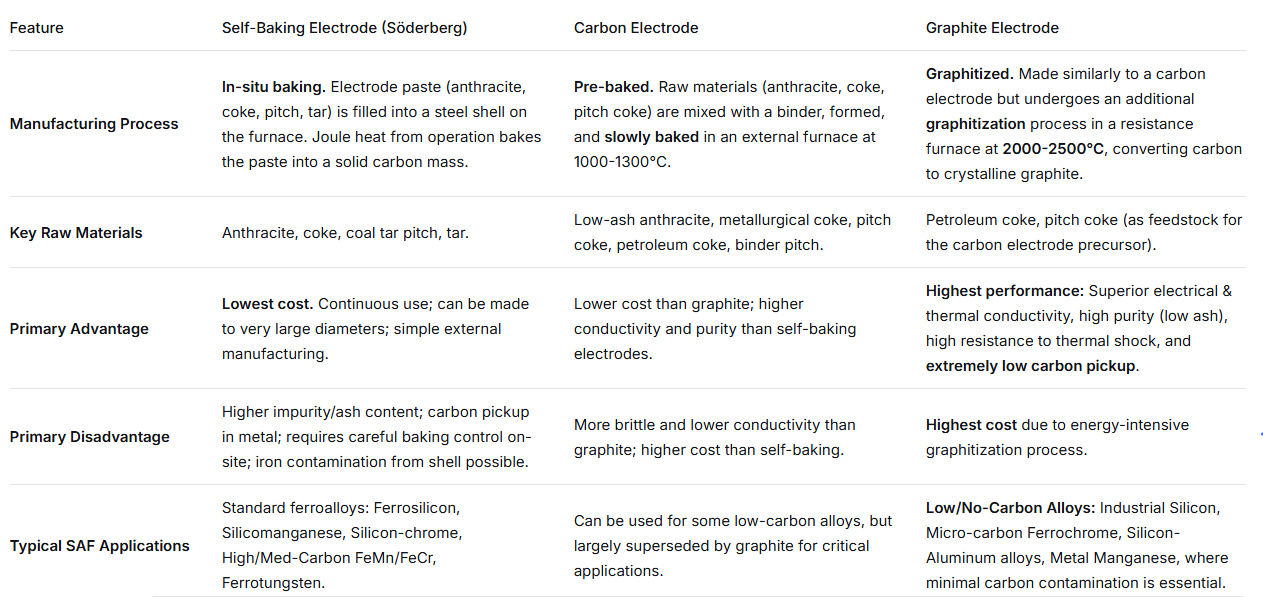
Application Summary and Selection Rationale
Self-Baking Electrodes dominate most large-scale ferroalloy production due to their significant economic advantage and ability to be used continuously in large-diameter formats. They are suitable for products where a moderate carbon content is acceptable or even required.
Graphite Electrodes are specified for premium and specialized applications where electrode-derived carbon contamination must be minimized. Their excellent conductivity, purity, and thermal properties are essential for producing low-carbon alloys like industrial silicon and micro-carbon ferrochrome. The higher electrode cost is justified by the stringent product quality requirements.
Carbon Electrodes occupy a middle ground but are less common in modern SAFs. They offer better performance than self-baking electrodes but at a higher cost and without reaching the superior properties of graphite. Their use is typically limited to specific, often smaller-scale, applications.
Conclusion:
The choice of electrode for a submerged arc furnace is fundamentally a trade-off between cost and performance/purity. Self-baking electrodes provide the most economical solution for bulk, carbon-tolerant ferroalloys. In contrast, graphite electrodes, despite their higher price, are indispensable for producing high-value, low-carbon metals and alloys where minimizing impurity pickup from the electrode is paramount to meeting product specifications.We are a professional electric furnace manufacturer. For further inquiries, or if you require submerged arc furnaces, electric arc furnaces, ladle refining furnaces, or other melting equipment, please do not hesitate to contact us at susie@aeaxa.com

